For The People: The Federal Art Project and SIU
For The People: The Federal Art Project and SIU
The Sharp Museum will host an opening reception Friday, February 20, for a new exhibit on the impact of the Federal Art Project (FAP) on the SIU campus and its legacy in the museum’s collections. The reception will be held in the museum from 4:30 to 7:30 and will feature a screening at 5:30 of The Murals, a documentary by Chicago filmmaker TG Jamroz about a pair of New Deal era murals in the Uptown Post Office painted by Henry Varnum Poor.
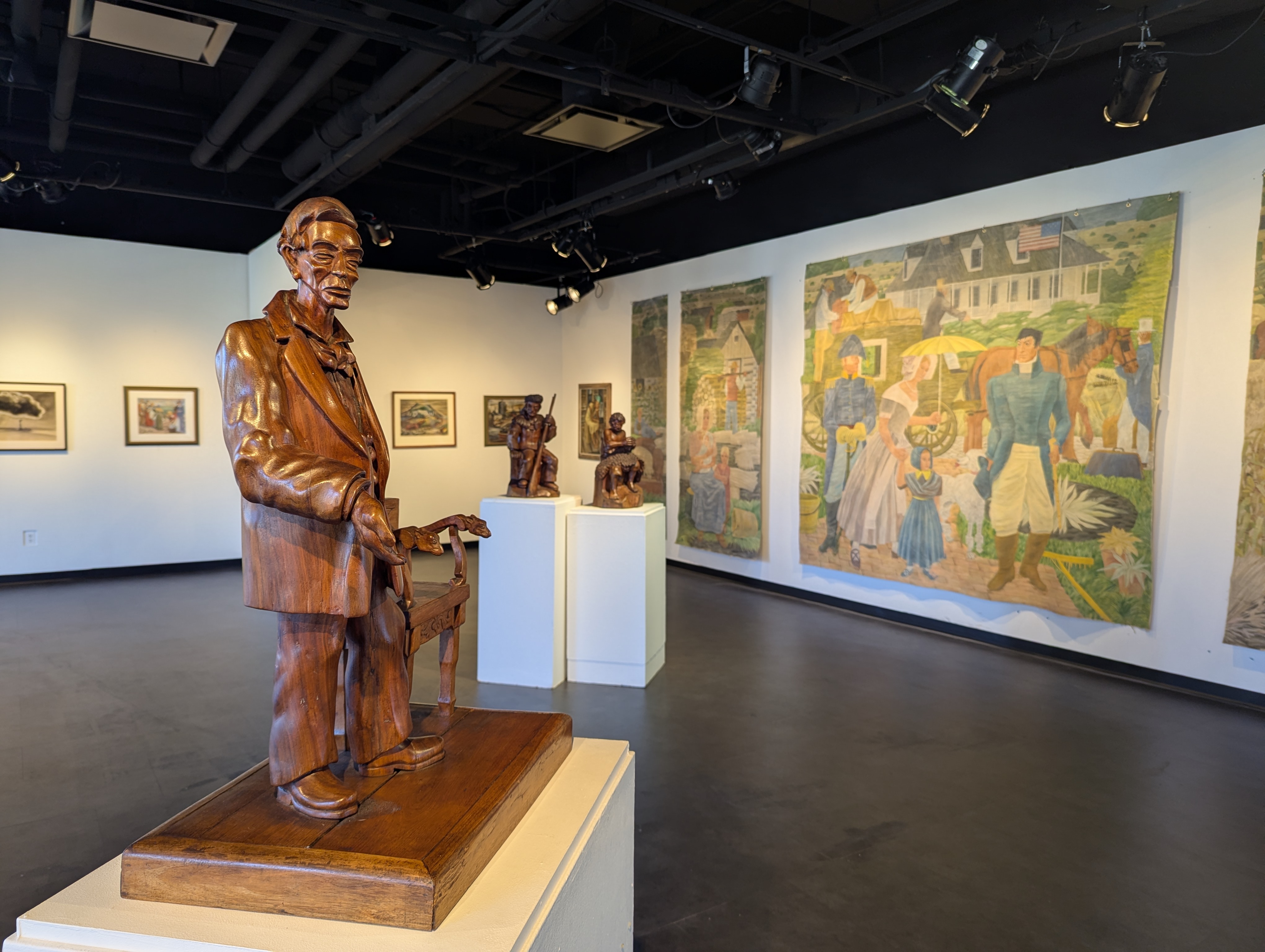
The SIU exhibit will feature nine of the mural panels that once decorated the second floor of Wheeler Library; 19 paintings by artists employed under the FAP; six carvings by West Frankfort sculptor Fred Myers, who worked for the SIU museum as part of the FAP; and five of the 21 dioramas showing life in frontier southern Illinois that were made by a team of artisans in the basement of Altgeld Hall between 1939 and 1942, also under the FAP.
The Wheeler mural panels, by German-born artist Karl Kelpe, feature scenes from southern Illinois history such as the 1825 visit of General Lafayette to the home of Pierre Menard. Removed from Wheeler when the new library opened in 1956, the canvas panels have been in storage ever since, except for one panel depicting the Lincoln-Douglas debate in Jonesboro, which hangs permanently in Faner Hall outside the Sharp Museum.
The 19 paintings from the museum’s collection include a number of artists based in Chicago, such as Aaron Bohrod and Joseph Vavak, as well as local artist Maude Craig, a quilter who turned to painting in her 50s and produced bright scenes of life in and around Creal Springs. Bohrod taught at SIU as a visiting artist in 1941-42 before joining the Army War Art Unit; his sketches of the Pacific War and of Normandy after D-Day were featured in LIFE Magazine.
The exhibit includes six Fred Myers pieces, all carved in black walnut, highlighted by a sculpture of Abraham Lincoln. A former coal miner and self-taught sculptor, Myers worked for the museum from 1939 to 1942, at first carving prehistoric animals for exhibits before turning to more contemporary subjects at the encouragement of director John W. Allen.
The dioramas project employed up to 28 people under Allen’s direction, using wood, metal, beeswax and other materials to create miniature people, furniture, tools, dwellings and other objects of frontier life in scenes depicting House Raising, Maple Syrup Making and other pioneer tasks.
The Murals documentary features an in-depth look at Henry Varnum Poor, who founded an arts colony north of New York City in the 1920s. Poor was married to the writer Bessie Breuer, whose papers are incidentally held in Morris Library’s Special Collections Research Center.
Part of the New Deal Works Progress Administration, the Federal Art Project was launched to give meaningful work to artists across the nation, including here in Illinois. In return, some of the art was given to the public, either distributed to museum collections or as murals in public buildings such as post offices, where many can still be seen.